Strength Training vs Cardio After 40: Which Do You Actually Need?
Sep 15, 2026
by Stephen Conca
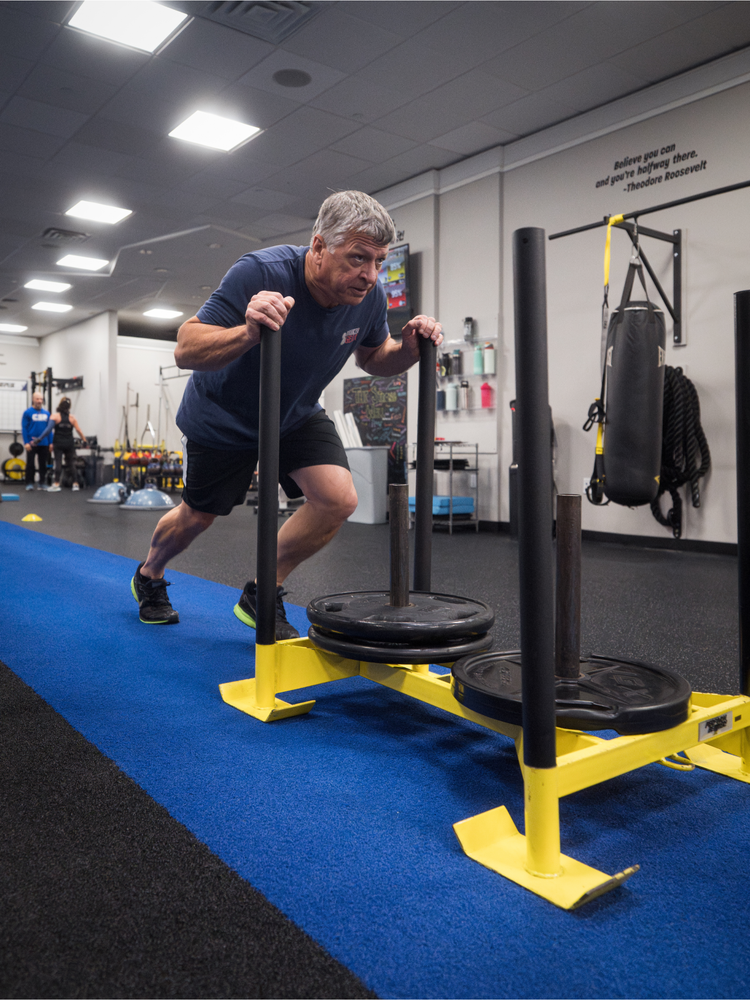
If you are over 40 and trying to decide between lifting weights and doing cardio, the best answer is usually not one or the other.
You need both.
Strength training helps maintain and build the muscular capacity you use for everyday life. Cardio develops the cardiovascular fitness that helps you walk, climb stairs, travel, work, and stay active without getting winded as easily.
The mistake is treating them as competitors.
A better question is this: How should you combine strength training and cardio based on your goals, fitness level, and ability to recover?
That is where your weekly plan starts becoming much more useful.
Why Strength Training Deserves a Place in Your Week 💪
Strength training is not just about building bigger muscles.
For adults, resistance exercise can help maintain strength and physical function. Current US physical activity guidance recommends muscle strengthening activity involving the major muscle groups on at least two days each week.
That becomes increasingly relevant as staying strong starts affecting what you can comfortably do outside the gym.
Think about:
- Carrying luggage through an airport.
- Getting up from the floor.
- Moving furniture.
- Working in the yard.
- Playing with your children or grandchildren.
- Walking up a steep flight of stairs.
The purpose of getting stronger is not simply to improve a number on a barbell.
It is to increase your capacity for life.
At Conca Sport and Fitness, Adult Team Strength focuses specifically on safe, joint-conscious strength training for adults over 40.
Cardio Solves a Different Problem ❤️
Strength training cannot completely replace aerobic exercise.
Cardio challenges your cardiovascular and respiratory systems and helps develop endurance.
US physical activity guidance recommends that adults accumulate at least 150 minutes of moderate-intensity aerobic activity each week, or 75 minutes of vigorous activity, or an equivalent combination.
Moderate intensity does not necessarily mean running.
Depending on your fitness level, it could include brisk walking, cycling, swimming, or appropriately structured conditioning.
A useful practical test is how hard the activity feels. During moderate activity, your breathing and heart rate noticeably increase, but the effort should still be sustainable.
Conca offers Adult Team Metabolic Training for adults who want structured conditioning alongside their other training.
Strength vs Cardio After 40: What Does Each Actually Do?
Instead of asking which one is better, compare the job each type of training performs.
| If you want to improve | Strength training | Cardio |
|---|---|---|
| Muscular strength | Primary tool | Limited role |
| Aerobic endurance | Limited role | Primary tool |
| Ability to lift and carry | Primary tool | Supporting role |
| Cardiovascular fitness | Supporting role | Primary tool |
| Maintaining physical function | Important | Important |
| A complete fitness routine | Necessary component | Necessary component |
The key point is simple.
Strength and cardio create overlapping benefits, but they are not interchangeable.
A well-rounded fitness plan uses each for what it does well.
What Most Adults Get Wrong
Mistake One: Doing Cardio Because Weight Loss Is the Only Goal
Someone decides they want to lose weight, so every workout becomes cardio.
Twenty minutes becomes forty.
Forty becomes sixty.
Meanwhile, resistance training disappears.
Physical activity can support weight management, but body weight is influenced by more than how many calories a workout appears to burn. Nutrition, total activity, sleep, consistency, and other individual factors matter too.
If fat loss is your goal, that does not make strength training optional.
Keeping resistance training in your routine allows you to pursue better fitness while also developing strength.
If nutrition is the part you struggle to put into practice, Health, Nutrition and Wellness Coaching can help connect what happens in the gym with sustainable habits outside it.
Mistake Two: Lifting Weights and Ignoring Your Engine
The opposite mistake happens too.
You lift consistently and become stronger, but almost never challenge your aerobic fitness.
Then a long hike, several flights of stairs, or a fast-paced recreational activity exposes the gap.
Being strong is valuable.
Being strong and well conditioned is more useful.
Mistake Three: Making Every Session Hard
This is particularly important after 40.
You do not need heavy strength work followed by exhausting conditioning every time you enter the gym.
Training creates stress.
Your weekly plan needs enough challenge to produce adaptation while still allowing you to recover and return for the next productive session.
More fatigue is not automatically more fitness.
So Which Should You Prioritize?
Your priority depends on where your biggest gap is.
Prioritize Strength When
You have not performed resistance training consistently.
Everyday lifting and carrying feels harder than it used to.
You want to become physically stronger.
Your current routine consists almost entirely of cardio.
You want a structured way to progressively challenge your muscles.
Prioritize Cardio When
You become winded quickly during everyday activity.
Your current training consists almost entirely of lifting.
You want to improve aerobic endurance.
Walking, hiking, cycling, or recreational activities feel limited by your conditioning.
Prioritize a Balanced Approach When
You want general health and fitness.
You want to stay capable as you age.
You enjoy both strength and conditioning.
You do not have one obvious weakness that needs extra attention.
For many adults over 40, this final category is the most realistic.
What Could a Balanced Week Actually Look Like? 📅
There is no universal weekly schedule, but seeing a realistic example makes the concept easier to apply.
Here is a hypothetical week for an adult who already exercises regularly and wants balanced general fitness.
Monday
Full-body strength training.
Tuesday
Moderate aerobic activity, such as brisk walking or cycling.
Wednesday
Strength training.
Thursday
Moderate aerobic activity or appropriately scaled conditioning.
Friday
Strength training or a mixed session, depending on recovery and goals.
Saturday
Walking, recreational activity, or a mixed strength and conditioning session.
Sunday
Rest or comfortable movement.
This is an example, not a prescription.
Your appropriate training volume depends on your experience, health, goals, schedule, and recovery.
Conca's current schedule reflects this same idea of giving different types of training distinct purposes. Adult Team Strength, Adult Team Metabolic, and Adult Team Hybrid sessions are separate options rather than making every workout identical.
Where Hybrid Training Fits
Hybrid training can be useful when you want elements of both strength and conditioning in one structured session.
But hybrid does not mean randomly combining exercises until you are exhausted.
A well-designed mixed session still needs a purpose.
For example, you might perform controlled strength work first, then complete a conditioning component appropriate to your ability.
Or the entire session might alternate demands in a way that balances muscular and cardiovascular work.
Conca's Adult Team Hybrid is specifically described as a balanced mix of strength and metabolic training.
For busy adults, that can provide another way to develop multiple aspects of fitness without assuming every training day has to look the same.
What Changes After 65?
The overall picture becomes even clearer for older adults.
CDC guidance for adults 65 and older includes three components:
Strengthening activity.
Aerobic activity.
Balance activity.
Balance deserves attention because fitness is not only about how much weight you can lift or how long you can exercise.
Your ability to control your body matters too.
CDC guidance specifically recommends balance-improving activities for adults 65 and older alongside aerobic and muscle strengthening work.
That is one reason Conca's programming for adults over 40 includes strength, mobility, balance, and sustainable conditioning rather than focusing on only one fitness quality.
How to Decide What Your Week Needs
Use this simple checklist before adding more exercise.
1. What Am I Already Doing?
If you run four days per week but never lift, another cardio session may not address your biggest gap.
If you lift four days per week but avoid aerobic work completely, adding another strength day may have diminishing practical value.
2. What Do I Want to Be Better At?
Be specific.
“I want to be healthier” is difficult to program.
“I want to carry my luggage without struggling” points toward strength.
“I want to hike without repeatedly stopping to catch my breath” points toward conditioning.
“I want both” points toward a balanced plan.
3. What Can I Recover From?
Do not build your program around the maximum amount of exercise you could survive during an unusually quiet week.
Build it around what you can repeat during normal life.
4. Is My Plan Progressing?
Repeating the same weights, distances, and intensity indefinitely is not much of a plan.
Training should evolve as your capacity changes.
5. Do I Know How Hard I Should Be Training?
If you are constantly guessing, professional coaching may be more useful than adding another workout.
Small Group Personal Training at Conca provides personalized coaching within a supportive group setting and is another option for adults who need more individual guidance.
When You Should Get Medical Guidance
Exercise recommendations are not identical for everyone.
If you have a chronic condition, significant physical limitation, active injury, concerning symptoms during exercise, or another medical issue that could affect activity, speak with an appropriate health care professional about the types and amounts of exercise suitable for you.
CDC guidance similarly recommends that adults with chronic conditions or disabilities consult a health professional or physical activity specialist when they need help determining appropriate activity.
That is not a reason to assume you cannot exercise.
It is a reason to make the plan fit the person.
The Best Choice Is Not Strength or Cardio
The strength versus cardio debate creates a false choice.
If your goal is broad, long-term fitness, you want a body that can produce force and sustain activity.
You want to be able to lift the suitcase and walk through the airport with it.
You want to be able to get off the floor and keep up on a family hike.
You want strength when life demands strength and endurance when life demands endurance.
The exact balance will be different for everyone.
If you are in West Springfield and are unsure how to combine the two, explore Conca Sport and Fitness's Adult Fitness Programs for Adults Over 40 and talk with a coach about which combination of strength, metabolic, hybrid, or small group training fits your current needs.
Frequently Asked Questions
Is strength training or cardio more important after 40?
Neither is universally more important. Strength training and aerobic exercise develop different aspects of fitness. US guidelines recommend that adults include both aerobic activity and muscle strengthening activity each week.
Can I do strength training and cardio on the same day?
Yes, they can be performed on the same day. How you organize them should depend on your primary goal, training experience, intensity, and recovery. If performance in one area is especially important, a coach can help determine how to structure the sessions.
Is walking enough cardio after 40?
Walking can count as aerobic exercise when the intensity is sufficient for you. Brisk walking is one example the CDC gives for moderate-intensity aerobic activity. Your fitness level influences how challenging a particular walking pace feels.
How many days should I strength train after 40?
US physical activity guidance recommends muscle strengthening activity involving all major muscle groups on at least two days each week for adults. Your individual program may differ depending on goals, experience, health, and recovery.
Do adults over 65 need different exercise?
Adults 65 and older are also advised to include aerobic and muscle-strengthening activity, with balance activity added as an explicit component of weekly physical activity guidance.