How to Start Working Out Again After 40 Without Doing Too Much Too Soon
Sep 1, 2026
by Stephen Conca
Starting Again Is Different From Starting From Scratch
Maybe you used to exercise regularly.
Then work became demanding.
You had kids.
An injury interrupted your routine.
Your schedule changed.
Or fitness simply moved lower on the priority list.
Suddenly, six months away from the gym became three years.
Now you want to return, but there is a problem.
Your brain remembers what you used to be able to do.
Your body may not be ready to do it yet.
That gap creates one of the biggest mistakes we see when adults return to fitness after 40: trying to restart at the level where they stopped.
The better strategy is not to prove how fit you used to be.
It is to establish what your body can do today and build from there.
That is exactly where One-on-One Personal Training for Adults Over 40 can be valuable. Instead of dropping you into a generic workout, coaching gives you a starting point based on your current strength, mobility, experience, and goals.
First, Forget Your Old Numbers 🧠
If you squatted a certain weight ten years ago, that number does not determine what you should lift today.
If you used to run five miles every Saturday, you do not need to immediately recreate that routine.
Your previous fitness experience can be useful because you understand what training feels like.
But it can also become a trap.
Adults returning to exercise often compare every workout to their younger selves.
Instead, establish a new baseline.
Ask:
- How does my body move today?
- Where do I feel stiff?
- Which movements feel comfortable?
- How is my balance?
- How quickly do I recover?
- How much training can my current schedule realistically support?
Those answers are far more useful than what you could do at 25.
The First Goal Is Not Weight Loss
This surprises people.
If you are returning to exercise, your first goal should be building the ability to train consistently.
Think about it this way.
Losing ten pounds is an outcome.
Completing three productive workouts every week is a behavior.
You control the behavior.
And repeating the right behaviors is what eventually produces the outcome.
For your first few weeks back, success might simply mean:
💪 Completing your planned sessions
🚶 Moving more throughout the week
😴 Recovering well between workouts
🥗 Improving one or two nutrition habits
📈 Gradually becoming stronger
That may sound less exciting than a dramatic transformation challenge.
But it builds something much more valuable: momentum you can actually maintain.
Start With Strength, Not Exhaustion 💪
One of the worst ways to judge a workout is by how destroyed you feel afterward.
Being sore for four days does not mean the workout was effective.
It usually means the training dose exceeded what your body was prepared for.
For adults returning after a long break, strength training provides a practical foundation because it can be progressed gradually.
You can adjust:
- Resistance
- Repetitions
- Range of motion
- Exercise complexity
- Training volume
- Rest periods
That flexibility makes strength training highly adaptable.
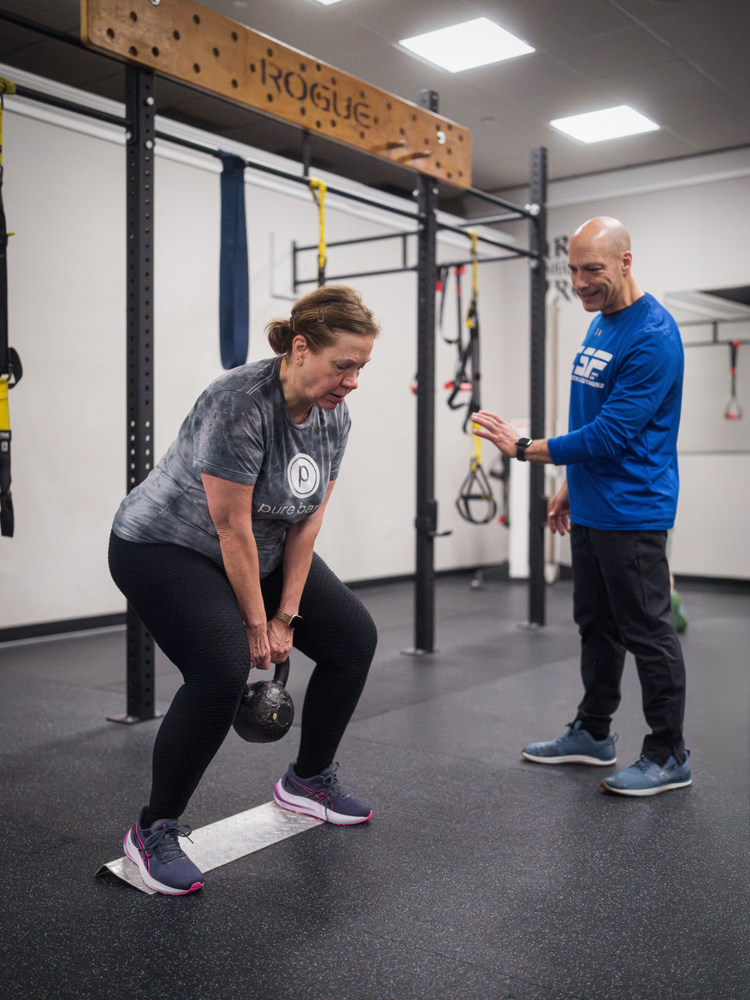
Conca Sport and Fitness builds its adult programming around strength, mobility, balance, and sustainable conditioning rather than asking adults over 40 to simply keep up with workouts designed for younger bodies.
Through Small Group Personal Training, you can receive coaching on form, progressions, and modifications while training alongside other adults.
The objective is not to make every session easy.
It is to make the challenge appropriate.
Your First Month Should Feel Almost Too Manageable
This is where patience becomes useful.
When motivation returns, people want immediate progress.
So they go from zero workouts to five.
That works until soreness, fatigue, work, and family responsibilities collide.
A better first month might look something like this:
Weeks One and Two
Focus on learning movements and establishing your routine.
Train two or three times.
Keep intensity manageable.
Pay attention to how you feel the following day.
Weeks Three and Four
Continue the routine.
Gradually increase resistance or repetitions where appropriate.
Notice which exercises are becoming easier.
Maintain enough recovery between challenging sessions.
At the end of the month, the goal is not to be exhausted.
The goal is to be ready for month two.
That distinction is huge.
Mobility Matters, But You Do Not Need to Become a Contortionist
Adults returning to exercise often notice stiffness first.
Hips feel tighter.
Shoulders do not move like they used to.
Getting down to the floor feels different.
The solution is not necessarily spending 30 minutes stretching before every workout.
Mobility should support the movements you actually need.
For example, if ankle mobility limits your squat, address the ankle.
If shoulder movement affects pressing exercises, work on the shoulder.
If sitting all day leaves your hips stiff, incorporate movement that helps restore comfortable range of motion.
The point is purposeful mobility, not stretching everything simply because you are over 40.
Know the Difference Between Discomfort and a Warning Sign ⚠️
Returning to exercise creates new sensations.
Muscles may feel tired.
You may experience normal soreness.
Your heart rate will increase during conditioning.
But pain should not be treated as proof that the workout is working.
Sharp pain, worsening joint discomfort, or symptoms that alter how you move deserve attention rather than an instruction to simply push through.
This is another advantage of Personalized Fitness Coaching.
A coach can observe how you move and adjust an exercise when something does not look or feel right.
That is much harder to do when you are copying a workout from your phone by yourself.
Do Not Ignore Conditioning
Strength is foundational, but being strong is only part of being fit.
You also want enough cardiovascular capacity to:
Walk up stairs without feeling exhausted.
Travel comfortably.
Play with your children or grandchildren.
Enjoy hiking, cycling, sports, or other activities.
Handle daily life with more energy.
Conditioning should therefore return gradually too.
You do not need to start with punishing cardio sessions.
Walking, controlled intervals, and appropriately scaled metabolic training can gradually rebuild capacity.
Conca offers Adult Team Metabolic Training alongside strength-focused and hybrid sessions, allowing conditioning to complement rather than replace strength work.
Recovery Is Part of Your Program 😴
One of the benefits of being older is that you usually know your life better.
Use that knowledge.
If Wednesday is always your most stressful workday, scheduling your hardest workout then may not make sense.
If you consistently sleep poorly after late evening training, experiment with another time.
If three consecutive hard sessions leave you exhausted, stop treating exhaustion as a character test.
Your program has to work with your life.
Recovery includes:
- Sleep
- Nutrition
- Hydration
- Stress management
- Lower intensity movement
- Appropriate rest between demanding sessions
Conca also offers Health, Nutrition and Wellness Coaching, which can help connect training with the habits outside the gym that influence energy, weight management, and long-term wellbeing.
What a Sustainable Week Can Look Like
There is no universal perfect schedule.
But someone returning to fitness might begin with something as simple as:
Monday
Full body strength training
Tuesday
Walking or light activity
Wednesday
Full body strength training
Thursday
Recovery and mobility
Friday
Strength or appropriately scaled conditioning
Weekend
Recreational movement, walking, outdoor activity, or recovery
The important part is not copying this exact schedule.
It is understanding the principle.
Hard days need to be balanced with easier days.
And your schedule needs to be realistic enough to repeat.
The Five Mistakes to Avoid When Returning to Fitness
Trying to Lose Months of Progress in Two Weeks
Fitness does not work that way.
Trying to accelerate everything usually increases fatigue rather than results.
Copying Your Old Workout
Your previous program was designed for your previous fitness level.
Reassess first.
Changing Your Diet Overnight
Training five days per week while simultaneously making an extreme nutrition change creates unnecessary friction.
Build habits gradually.
Using Soreness as Your Scorecard
The goal is progress, not pain.
Track strength, movement, energy, consistency, and confidence instead.
Waiting Until You Feel Completely Ready
You probably will not.
A better first step is finding an appropriate starting point.
A Simple Restart Checklist ✅
Before committing to your new fitness routine, answer these questions:
✔ What do I actually want fitness to help me do?
✔ How many sessions can I realistically maintain each week?
✔ Are there injuries or limitations my coach should know about?
✔ What movements currently feel difficult?
✔ How will I measure progress beyond body weight?
✔ What usually causes me to stop exercising?
✔ What support would make consistency easier this time?
That final question is particularly important.
If your previous attempts failed because you were trying to figure everything out alone, another solo attempt with a different workout app may not solve the underlying problem.
Change the system, not just the exercises.
You Do Not Have to Get Fit Before Joining a Gym
This belief keeps too many people waiting.
“I'll start walking first.”
“I need to lose some weight.”
“I want to get in slightly better shape before I work with a trainer.”
You do not need to prepare yourself for coaching.
Helping you determine where to begin is part of coaching.
Conca Sport and Fitness specifically works with adults over 40 who may be restarting their fitness journey and offers one-on-one coaching, Small Group Personal Training, and Nutrition and Wellness Coaching depending on the level of support and environment that fits the individual.
Your Comeback Does Not Need to Be Dramatic 🌟
You do not need a six-day workout schedule.
You do not need to train like you did 20 years ago.
And you definitely do not need to punish yourself for the time you spent away.
You need a starting point.
Then you need the right amount of challenge, repeated consistently enough for your body to adapt.
The first victory is not losing 20 pounds or lifting a certain weight.
It is reaching the point where exercise feels like a normal part of your week again.
From there, strength can grow.
Conditioning can improve.
Confidence can return.
And the things you want to do outside the gym can start feeling easier.
If you are ready to return but are unsure where to begin, Talk With a Coach at Conca Sport and Fitness and start with a plan built around the body, schedule, and goals you have today.
FAQ
Is 40 too late to start working out again?
No. Adults can benefit from becoming more physically active and building strength at many stages of life. The important part is choosing an appropriate starting point and progressing gradually.
How many days a week should I exercise when starting again?
The right frequency depends on your current fitness, goals, recovery, and schedule. For many people, starting with two or three structured sessions is more sustainable than immediately trying to exercise every day.
Should I start with cardio or strength training after 40?
Both have value, but strength training provides an important foundation for maintaining muscle, improving function, and supporting everyday movement. Cardiovascular training can then complement your strength program.
How hard should my first workouts be after a long break?
Your first workouts should provide enough challenge to stimulate adaptation without creating excessive fatigue or soreness that interferes with your next session.
What if I have an old injury?
Tell your coach about previous injuries before beginning. Exercise selection, range of motion, resistance, and progression can often be adjusted around individual needs. If you have an active injury or medical concern, seek appropriate medical guidance before beginning a new exercise program.
Is personal training worth it when returning to exercise?
It can be especially useful after a long break because a coach can establish an appropriate starting point, teach technique, adjust exercises, manage progression, and provide accountability.