How Often Should You Strength Train After 40? A Practical Weekly Guide
Nov 1, 2026
by Stephen Conca
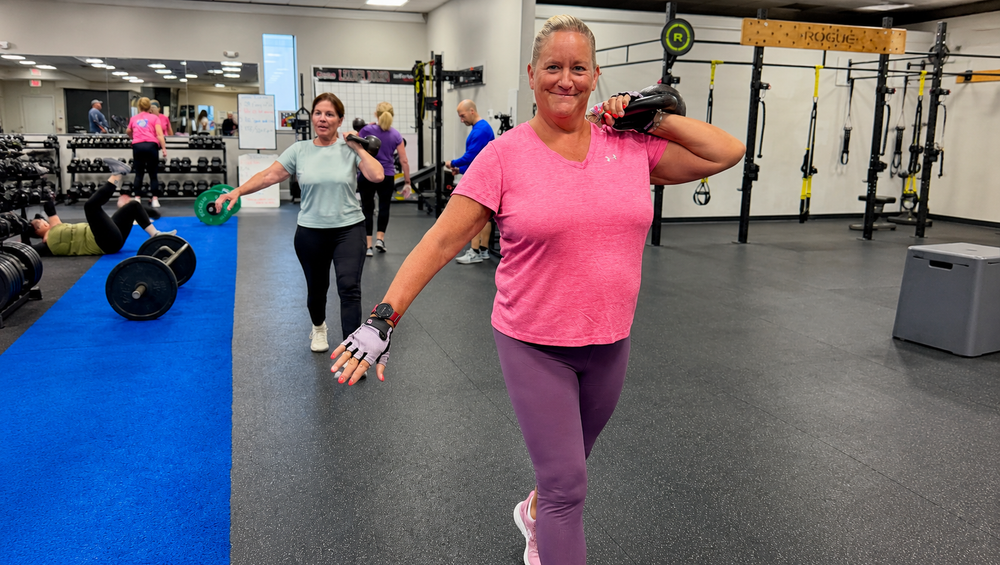
If you are over 40 and wondering how many days a week you should lift weights, two strength training days per week is a useful starting point for many adults.
That is consistent with guidance from the Centers for Disease Control and Prevention and the American College of Sports Medicine, which recommend strengthening all major muscle groups at least twice weekly.
But two days is a starting point, not a universal limit.
Some people benefit from three or more sessions, depending on their goals, training experience, weekly workload, and ability to recover.
The most important question is not how many workouts you can fit into a calendar. It is how many productive sessions you can repeat consistently while making progress.
Why Two Strength Training Days Matter 💪
Strength training is about more than increasing the weight you lift.
Resistance exercise can improve muscular strength, muscle size, and several measures of physical function. These qualities help support everyday activities such as carrying groceries, climbing stairs, lifting objects, and getting up from a chair.
The CDC physical activity guidelines recommend muscle strengthening activities involving all major muscle groups on at least two days each week.
The 2026 American College of Sports Medicine position stand similarly emphasizes regular progressive resistance training.
That is encouraging if you have a demanding schedule.
You do not need to spend every day lifting weights to begin building strength.
You need an appropriate program that challenges your muscles regularly.
Is Training Three Days Better Than Two?
Not necessarily.
A third training day can provide another opportunity to practice movements, distribute exercises across the week, or complete additional training volume.
But adding another day does not automatically produce better results.
Research shows that the amount of work performed across the week matters. When total training volume is comparable, simply spreading that work over more days does not consistently improve muscle growth.
For example, consider two hypothetical adults.
One completes two carefully planned full-body sessions each week.
The other attends four sessions but frequently skips exercises, rushes through workouts, and struggles to recover.
The second person is not automatically following the better program.
Training quality, appropriate progression, and consistency matter more than attendance numbers alone.
What Your Weekly Schedule Could Look Like
The following examples are starting frameworks, not personalized prescriptions.
| Frequency | Example schedule | Who it may suit |
|---|---|---|
| Two days | Monday and Thursday | Beginners and busy adults |
| Three days | Monday, Wednesday, Friday | Adults wanting another structured session |
| Four days | Monday, Tuesday, Thursday, Friday | Experienced exercisers with an appropriately divided program |
The more frequently you train, the more important it becomes to consider which muscles you are challenging and how demanding each session is.
Four hard full-body workouts are not automatically better than two or three well-planned sessions.
A Two-Day Strength Training Plan
For someone returning to structured exercise, two full-body sessions may provide a manageable starting point.
Monday: Full Body Strength
A session might include:
-
A squat or sit-to-stand variation.
-
A pushing exercise.
-
A rowing or pulling movement.
-
A hip hinge exercise.
-
A core stability exercise.
Thursday: Full Body Strength
The second session might include:
-
A different squat or step variation.
-
A pressing exercise.
-
A pulling movement.
-
A hip-focused strength exercise.
-
A carry or another appropriate stability movement.
The exact exercises, resistance, repetitions, and sets should reflect your abilities.
This structure provides opportunities to challenge the major muscle groups without requiring daily gym visits.
At Conca Sport and Fitness in West Springfield, Small Group Personal Training offers individualized exercise adjustments, progression guidance, and coaching in a supportive group environment.
That can be particularly helpful if you are unsure how to organize a complete strength session.
What About Three Training Days? 📅
Three days may make sense when two sessions feel manageable, and you want additional opportunities to train.
For example:
Monday: Full body strength.
Wednesday: Full body strength with different exercise variations.
Friday: Full body strength with an emphasis selected according to your goals.
You could also use a different arrangement that combines strength with appropriately planned conditioning.
Conca offers Adult Team Strength, Adult Team Metabolic, and Adult Team Hybrid sessions.
These formats have different purposes.
Adult Team Strength emphasizes resistance training.
Adult Team Metabolic emphasizes conditioning.
Adult Team Hybrid combines strength and metabolic training.
That distinction is important when counting your weekly strength sessions. Attending three classes does not necessarily mean you have completed three full strength workouts.
The exercises and muscular demands of each session determine what training you actually performed.
Recovery Is About More Than Taking a Day Off
A common mistake is assuming that every workout needs to be equally difficult.
Your body needs opportunities to adapt to training.
Recovery depends on several factors, including:
-
How challenging your previous session was.
-
Which muscles you trained.
-
Your total weekly training volume.
-
Sleep and nutrition.
-
Stress and other physical activity.
-
Your training experience.
You may feel ready for another workout while certain muscles still need less demanding work.
This is one reason training frequency should be planned together with exercise selection and intensity.
If you are constantly exhausted, experiencing persistent soreness, or noticing a sustained decline in performance, your program may need adjustment.
More sessions are not always the answer.
How to Know Whether You Are Ready for Another Day
Before increasing your training frequency, ask yourself five questions.
1. Am I Consistently Completing My Current Sessions?
If two days are difficult to maintain, adding a third may create more scheduling pressure without solving the real problem.
2. Am I Getting Stronger?
Look for improvements in exercise control, repetitions, resistance, or your ability to perform movements confidently.
You do not need a personal record every week.
3. Am I Recovering Between Workouts?
Consider your energy, soreness, sleep, and performance across several weeks.
4. Do I Have a Reason to Add More Training?
Maybe you want additional strength development, more exercise practice, or a better way to distribute your weekly training volume.
That is more useful than adding a workout simply because more sounds better.
5. Does Another Session Fit My Real Schedule?
A three-day routine you can maintain is more valuable than a five-day routine you repeatedly abandon.
Common Scheduling Mistakes After 40 ⚠️
Mistake One: Treating Every Day as a Hard Day
You can be active daily without performing demanding strength workouts every day.
Walking, recreational activities, and comfortable movement can complement resistance training.
Mistake Two: Counting Classes Without Considering Their Purpose
A conditioning session and a full-body strength session create different training demands.
Understand what each workout is designed to accomplish.
Mistake Three: Increasing Frequency Before Improving Consistency
If you are still establishing a routine, concentrate on showing up for your existing sessions.
Mistake Four: Copying Someone Else's Schedule
A person who has trained consistently for ten years may tolerate a different workload from someone who recently returned to exercise.
Your program should reflect your starting point.
Mistake Five: Ignoring Your Goals
Someone preparing for a recreational event may organize training differently from someone focused on general strength and everyday function.
The calendar should support the goal.
How Strength Training Fits With Cardio
Strength training is important, but it is not the only physical activity adults need.
The CDC recommends at least 150 minutes of moderate-intensity aerobic activity each week, or an equivalent amount of vigorous activity, in addition to muscle-strengthening exercise.
That aerobic activity can be distributed across your week.
For example, you might strength train on Monday and Thursday while walking briskly on other days.
You do not have to choose between strength and cardiovascular fitness.
A balanced routine can include both without making every session exhausting.
What If You Are Over 60 or Have Physical Limitations?
The basic recommendation to include muscle-strengthening activity remains relevant for older adults.
However, training needs can vary considerably.
For adults 65 and older, CDC guidance also emphasizes activities that improve balance.
If you have an active injury, significant joint symptoms, osteoporosis, cardiovascular concerns, or another medical condition affecting exercise, seek appropriate professional guidance before changing your training frequency or intensity.
A coach can help with exercise programming, but clinical concerns may require evaluation by a qualified health professional.
How Conca Can Help You Build a Realistic Routine
Conca Sport and Fitness designs its adult programs around strength, mobility, balance, and sustainable conditioning.
Its published schedule includes coached training options throughout the week, allowing members to consider different sessions based on their goals and availability.
For adults who want more personalized guidance, Small Group Personal Training includes coaching on form, exercise modifications, and progression.
For those who enjoy a team environment, Adult Team Training provides strength, metabolic, and hybrid options.
The right choice depends on the type of exercise you need, not simply the number of classes you can attend.
The Best Training Schedule Is One You Can Maintain
You do not need to lift weights every day to make strength training worthwhile.
For many adults over 40, two well-planned sessions provide a practical foundation.
A third session may be useful when your goals, experience, recovery, and schedule support it.
More frequent training can also work, but it requires thoughtful programming.
Start with a routine you can repeat. Pay attention to your progress. Adjust when there is a reason to adjust.
If you are unsure how many strength sessions make sense for you, explore Small Group Personal Training at Conca Sport and Fitness in West Springfield and speak with a coach about building a schedule around your current abilities and goals.
Frequently Asked Questions
Is strength training twice a week enough after 40?
Two days per week can provide meaningful benefits and meet the minimum muscle strengthening frequency recommended in US physical activity guidance, provided the major muscle groups are trained appropriately.
Can I strength train three days in a row?
It depends on the exercises, muscles trained, intensity, and your ability to recover. Consecutive sessions may be appropriate when the program distributes training demands intelligently, but repeating demanding workouts for the same muscles without sufficient recovery may not be suitable.
Should I lift weights every day to build muscle?
No. Daily lifting is not required. Muscle growth depends on an adequate training stimulus, appropriate progression, and recovery rather than simply maximizing the number of workout days.
Does walking count as a strength workout?
Walking is valuable physical activity and can contribute to aerobic fitness, but ordinary walking generally does not replace progressive resistance exercise involving all major muscle groups.
